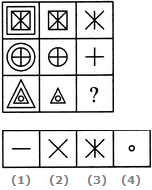
Explanation:
In each row, the second figure is obtained by removing the outermost element of the first figure and the third figure is obtained by removing the outermost element of the second figure.
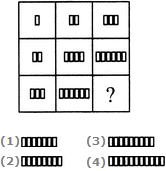
Explanation:

Explanation:
There are 3 types of shadings in the triangles, 3 types of legs, 3 positions of circles, each of which is used only once in a single row. The circle is shaded in alternate figures.

Explanation:
In each row, the third figure is a combination of the first and the second figure.
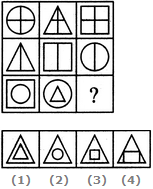
Explanation:
In each row, the triangle follows the circle, the square follows the triangle and the circle follows the square. In case of the third row, the above rule exists for the inner as well as the outer elements.
फिगर म्याट्रिक्स पूरा गर्ने चारवटा विकल्पहरूबाट उपयुक्त आकृति चयन गर्नुहोस्।
Explanation:
In each row, the second figure forms the innermost and the outermost elements of the third figure and the first figure forms the middle element of the third figure.
फिगर म्याट्रिक्स पूरा गर्ने चारवटा विकल्पहरूबाट उपयुक्त आकृति चयन गर्नुहोस्।
Explanation:
In each row, the second figure is obtained by shading one of the four parts of the first figure and the third figure is obtained by shading two out of the four parts of the first figure.
फिगर म्याट्रिक्स पूरा गर्ने चारवटा विकल्पहरूबाट उपयुक्त आकृति चयन गर्नुहोस्।
Explanation:
The third figure in each row comprises of parts which are not common to the first two figures.
फिगर म्याट्रिक्स पूरा गर्ने चारवटा विकल्पहरूबाट उपयुक्त आकृति चयन गर्नुहोस्।
Explanation:
In each row, there are three types of outer elements (circle, triangle and square), three types of inner elements (circle, triangle and square) and three types of shadings in the inner elements (black, white and lines).
फिगर म्याट्रिक्स पूरा गर्ने चारवटा विकल्पहरूबाट उपयुक्त आकृति चयन गर्नुहोस्।
Explanation:
In each row, there are three types of arrows - an arrow with a single head and without any base, an arrow with double head having a circle at its base, an arrow with triple head having a rectangle at its base. Also, in each row, the arrows point in three directions - upwards, downwards and towards the right.
फिगर म्याट्रिक्स पूरा गर्ने चारवटा विकल्पहरूबाट उपयुक्त आकृति चयन गर्नुहोस्।
Explanation:
In each row, the number of elements in the third figure is equal to the difference in the number of elements in the first and second figures. Also, the third figure has the same types of elements (if any) as the elements in the first figure.
फिगर म्याट्रिक्स पूरा गर्ने चारवटा विकल्पहरूबाट उपयुक्त आकृति चयन गर्नुहोस्।
Explanation:
In each row, the second figure is obtained by rotating the first figure through 90o CW or 90o ACW and adding a circle to it. Also, the third figure is obtained by adding two circles to the first figure (without rotating the figure).
फिगर म्याट्रिक्स पूरा गर्ने चारवटा विकल्पहरूबाट उपयुक्त आकृति चयन गर्नुहोस्।
Explanation:
There are 3 types of faces, 3 types of hands and 3 types of legs. Each type is used once in each row! So, the features not used in the first two figures of the third row would together form the missing figure.
फिगर म्याट्रिक्स पूरा गर्ने चारवटा विकल्पहरूबाट उपयुक्त आकृति चयन गर्नुहोस्।
Explanation:
In each row, the first figure is rotated through 90o CW to obtain the second figure and the second figure is rotated through 90o CW to obtain the third figure.
फिगर म्याट्रिक्स पूरा गर्ने चारवटा विकल्पहरूबाट उपयुक्त आकृति चयन गर्नुहोस्।
Explanation:
The two parts of the first figure are rearranged and joined along the longer sides. The common side is then lost to form the second figure.
फिगर म्याट्रिक्स पूरा गर्ने चारवटा विकल्पहरूबाट उपयुक्त आकृति चयन गर्नुहोस्।
Explanation:
बाहिरको रेखा हटाइएको छ ।
फिगर म्याट्रिक्स पूरा गर्ने चारवटा विकल्पहरूबाट उपयुक्त आकृति चयन गर्नुहोस्।
Explanation:
In each row, the central part of the first figure rotates either 90o CW or 90o ACW to form the central part of the second figure and the central part of the first figure rotates through 180o to form the central part of the third figure. Also, in each row, there are 3 types of side elements - rectangles, circles and triangles.
फिगर म्याट्रिक्स पूरा गर्ने चारवटा विकल्पहरूबाट उपयुक्त आकृति चयन गर्नुहोस्।
Explanation:
In each column, the third figure (lowermost figure) contains one less number of hexagons as the first figure (uppermost figure) and the same number of trees as the second figure (middle figure).
फिगर म्याट्रिक्स पूरा गर्ने चारवटा विकल्पहरूबाट उपयुक्त आकृति चयन गर्नुहोस्।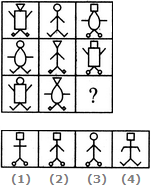
Explanation:
There are 3 types of faces, 3 types of bodies, 3 types of hands and 3 types of legs, each of which is used only once in a single row. So, the features which have not been used in the first two figures of the third row would combine to produce the missing figure.
फिगर म्याट्रिक्स पूरा गर्ने चारवटा विकल्पहरूबाट उपयुक्त आकृति चयन गर्नुहोस्।
Explanation:
In each row, the second figure is obtained from the first figure by reversing the direction of the RHS arrow and the third figure is obtained from the second figure by reversing the direction of both the arrows.
फिगर म्याट्रिक्स पूरा गर्ने चारवटा विकल्पहरूबाट उपयुक्त आकृति चयन गर्नुहोस्।
Explanation:
In each row, the figures are getting laterally inverted in each step. The number of components or the quantities are either increasing or decreasing from left to right sequentially.
फिगर म्याट्रिक्स पूरा गर्ने चारवटा विकल्पहरूबाट उपयुक्त आकृति चयन गर्नुहोस्।
Explanation:
The second figure is obtained from the first figure by moving the line segment to the opposite side of the square boundary and replacing it with two similar line segments. Also, the element in the lower-left corner gets replaced by two similar elements - one placed in the upper-left and the other placed in the lower-right corner.
फिगर म्याट्रिक्स पूरा गर्ने चारवटा विकल्पहरूबाट उपयुक्त आकृति चयन गर्नुहोस्।
Explanation:
In each row, there are 3 types of shadings of circles - a circle is unshaded, another circle has its right half shaded with vertical lines and yet another circle has its upper half shaded with horizontal lines. There are three specified positions of the two triangles each of which is used only once in a row. Also, two of the figures in each row have one triangle shaded.
फिगर म्याट्रिक्स पूरा गर्ने चारवटा विकल्पहरूबाट उपयुक्त आकृति चयन गर्नुहोस्।
Explanation:
In each row, the third figure is a collection of the common elements (line segments) of the first and the second figures.
फिगर म्याट्रिक्स पूरा गर्ने चारवटा विकल्पहरूबाट उपयुक्त आकृति चयन गर्नुहोस्।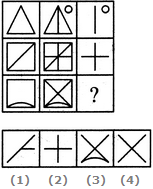
Explanation:
पहिलो र दोश्रो चित्रमा रहेका Common रेखा हटाइ तेश्रो चित्र तयार गरिएको छ ।
फिगर म्याट्रिक्स पूरा गर्ने चारवटा विकल्पहरूबाट उपयुक्त आकृति चयन गर्नुहोस्।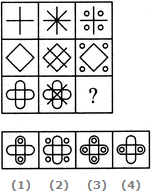
Explanation:
पहिलो र दोश्रो चित्रका Common रेखा राखेर त्यसको वरीपरी गोलो राखि तेश्रो चित्र तयार गरिएको ।
फिगर म्याट्रिक्स पूरा गर्ने चारवटा विकल्पहरूबाट उपयुक्त आकृति चयन गर्नुहोस्।
Explanation:
पहिलो र दोश्रो चित्रका Common रेखाहरु हटाइ वाकी रेखा सहित तेश्रो चित्र तयार गरिएको ।
फिगर म्याट्रिक्स पूरा गर्ने चारवटा विकल्पहरूबाट उपयुक्त आकृति चयन गर्नुहोस्।
Explanation:
माथिल्लो भागमा चित्र १ लाइ उल्ट्याई चित्र २ माथि राखिएको छ ।
फिगर म्याट्रिक्स पूरा गर्ने चारवटा विकल्पहरूबाट उपयुक्त आकृति चयन गर्नुहोस्।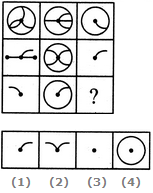
Explanation:
पहिलो चित्र र दोश्रो चित्रका Common रेखाहरु राखेर तेश्रो चित्र तयार पारिएको ।
फिगर म्याट्रिक्स पूरा गर्ने चारवटा विकल्पहरूबाट उपयुक्त आकृति चयन गर्नुहोस्।
Explanation:
पहिलो र दोश्रो चित्रमा रहेका Common रेखाहरु हटाउने र बाँकी रेखाहरु समेटेर तेश्रो चित्र बनाइएको ।
फिगर म्याट्रिक्स पूरा गर्ने चारवटा विकल्पहरूबाट उपयुक्त आकृति चयन गर्नुहोस्।
Explanation:
माथिल्लो भागको चित्रमा ३ वटा रेखाबाट क्रमश घट्दै गएको छ ।
दोश्रो भागको चित्रमा २ वटा पातबाट बढ्दै क्रमश ३ र ४ वटा बनेका छन् ।
तल्लो भागको चित्रमा दोश्रो तित्रमा माथिल्लो भागमा एउटा गोलो जस्तो आकृति आएको छ भने तेश्रो चित्रमा तल्लो भागमा पनि गोलो आकृति आउनुपर्छ ।
फिगर म्याट्रिक्स पूरा गर्ने चारवटा विकल्पहरूबाट उपयुक्त आकृति चयन गर्नुहोस्।
Explanation:
चित्रमा आकृतिहरु २,३,४ हुदै क्रमश दायाँ तर्फ बढेको छ ।
फिगर म्याट्रिक्स पूरा गर्ने चारवटा विकल्पहरूबाट उपयुक्त आकृति चयन गर्नुहोस्।

Explanation:
चित्रमा Common लाईन/ऐरो/आकृति हटाइएको छ र बाँकी लाईन/ऐरो/आकृति समावेश गरी तेश्रो चित्र बनेको छ ।
फिगर म्याट्रिक्स पूरा गर्ने चारवटा विकल्पहरूबाट उपयुक्त आकृति चयन गर्नुहोस्।
Explanation:
पहिलो खण्डका चित्रहरु दोश्रो खण्डमा आउदा 90 डिग्री CW घुमेको छ भने दोश्रो चित्र पहिलो स्थानमा आएको छ भने तेश्रो स्थानको चित्र दोश्रो स्थानमा आएको छ ।